

After decades digitizing complex systems for airlines and tech giants, Dinakara Nagalla is now building platforms rooted in a simple conviction: technology should reflect human stories, not erase them.
Most founders build products to solve problems they’ve observed. Dinakara Nagalla builds platforms from problems he’s lived with. The distinction matters, not because personal experience guarantees success, but because it fundamentally shapes what gets built and why.
As former CEO of EmpowerMX, Nagalla transformed aircraft maintenance through AI-enabled compliance tools adopted by airlines worldwide. His technical credentials span American Airlines where he managed operations for 200+ million passengers annually, and Sabre. He’s launched products that reached hundreds of millions of users.
Then life redirected his expertise toward more personal missions: mental wellness, transparent giving, and educational equity. Not because these markets presented lucrative opportunities, but because he understood their problems through experience that couldn’t be researched away.
“Personal storms can fuel systems that serve others,” Nagalla reflects. It’s a principle embedded in the architecture of his three platforms: Saayam for transparent charitable giving, Aauti for equitable education, and Menthra for mental wellness.
Each addresses trust deficits in systems that claim to help but often fail those who need support most. Charitable donations disappear into overhead percentages. Educational resources bypass underserved communities. Mental health apps reset between sessions, treating users as perpetual strangers rather than building therapeutic relationships.
Nagalla’s response to these failures shapes every design decision. Menthra, his newest platform, launched as the world’s first AI mental wellness companion with continuous memory. Not because memory represents cutting-edge AI research, but because forgetting is abandonment disguised as technology.
“You pour your heart out on Tuesday,” he explains. “Thursday asks ‘How can I help you?’ like you’ve never met. That’s not support. That’s amnesia.”
Menthra’s architecture reflects hard-won understanding of what people actually need during mental health struggles. The platform features hyper-realistic digital twin avatars with natural voice capabilities, not for visual novelty, but because therapeutic presence matters. Pattern recognition identifies triggers and tracks genuine progress, not for engagement metrics, but because consistency builds trust. Crisis detection ensures seamless escalation to licensed therapists, not to replace human expertise, but to bridge the dangerous gaps in traditional care.
Every technical choice serves emotional reality. HIPAA aligned privacy and end-to-end encryption aren’t regulatory checkboxes. They’re recognition that vulnerability requires absolute safety. One-click data deletion isn’t a privacy feature. It’s acknowledgment that healing sometimes means letting go. The refusal to monetize through data sales isn’t idealism. It’s understanding that trust, once broken, rarely returns.
“The best technology begins with understanding pain,” Nagalla says. “Not the pain of inefficiency. The pain of being unheard.”
This December, Menthra introduced modules for children and teens with parent dashboards. The design reflects nuanced understanding of adolescent mental health: young people need private therapeutic space while parents need oversight. Generic family features wouldn’t capture this tension. Nagalla’s platform architecture does because he understands what’s at stake when systems fail vulnerable populations.
Nagalla’s aviation background shapes his approach to human-centered platforms in unexpected ways. Aircraft maintenance taught him that systems must remember everything because forgetting creates catastrophic consequences. Compliance tracking taught him that transparency builds trust more effectively than marketing promises. Working with mechanics taught him that technology should amplify human expertise, never dismiss it.
Those lessons now drive platforms addressing very different problems. Saayam ensures charitable giving maintains memory of impact, allowing donors to track contributions from intention to outcome. Aauti remembers learner progress and educator needs, adapting resources across years rather than delivering disconnected lessons.
And Menthra maintains therapeutic continuity that existing mental health apps can’t match because Nagalla spent decades building systems where memory isn’t optional.
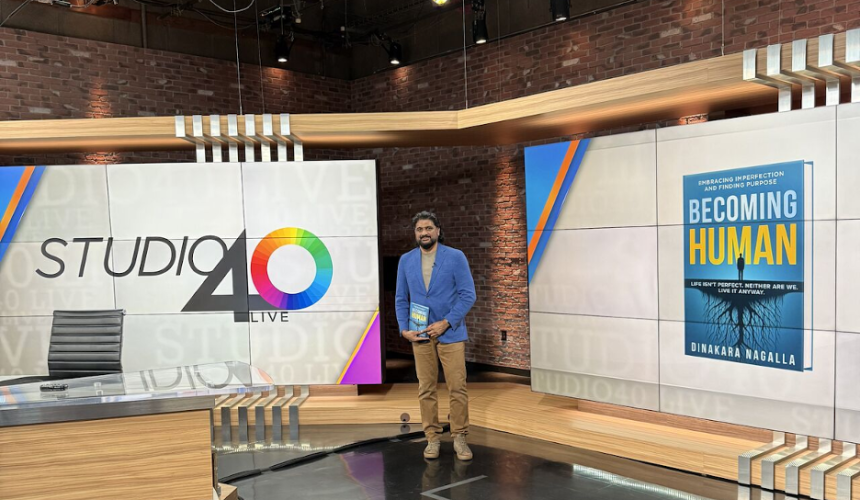
His work has been featured in Aerospace Tech Review, LARA Magazine, and Aircraft IT, establishing credibility in complex systems transformation. His bestselling book “Becoming Human: Embracing Imperfection and Finding Purpose” explores how personal imperfection can fuel technological systems that serve others.
By early 2026, Menthra launches its therapist marketplace, allowing licensed practitioners specializing in child and adolescent psychology to create digital twin versions of themselves. This hybrid model doesn’t replace therapeutic relationships. It extends them through AI that carries a practitioner’s approach into the hours between scheduled sessions.
The vision addresses systemic constraints in mental healthcare: 71% of employees experience stress, yet only 12% have access to support. Wait times stretch for weeks. Sessions cost hundreds of dollars. Limited availability creates barriers exactly when people need help most.
Menthra’s architecture doesn’t solve this through efficiency gains. It solves through continuous presence. AI companions that remember your story, recognize your patterns, and connect you to human expertise when critical moments arrive.
Across Menthra, Aauti, and Saayam, Nagalla’s platforms share common principles forged through personal experience: Memory is infrastructure, not feature. Trust compounds through consistency, not marketing. The best technology amplifies human capabilities rather than replacing them. And systems designed for healing require different incentives than systems designed for growth.
These aren’t abstract values extracted from user research. They’re convictions formed through understanding what happens when systems fail people during vulnerable moments.
Nagalla’s broader aspiration extends beyond current platforms. He envisions AI memory systems that carry legacy, not just data, but voices, values, and contradictions that make us human. Not perfection. Not curation. Authentic experience preserved with dignity.
“Personal storms taught me something product roadmaps never could,” he reflects. “When someone trusts you with their story at 2 AM, forgetting that story isn’t just bad technology. It’s abandonment. We’re ending that.”
In an industry that treats personal hardship as disqualifying rather than informative, Nagalla is proving that the deepest technical insights often emerge from lived experience. His platforms succeed not despite their founder’s journey, but because that journey taught lessons that market research can’t capture.
The mental health crisis costs companies $300 billion annually. Educational inequity perpetuates across generations. Charitable giving loses credibility as overhead obscures impact. These aren’t problems requiring more efficient algorithms. They’re problems requiring systems built by people who understand what’s actually broken. Dinakara Nagalla is building those systems, one remembered conversation, one transparent donation, one supported student at a time. Not because personal storms guarantee success, but because they teach what matters when technology meets humanity’s most urgent needs.