

By: Will Jones
Company values are often discussed in abstract terms through mission statements, culture decks, or carefully polished slogans. For The Light System, those values recently took on a far more tangible form after an employee faced a moment no pet owner ever wants to experience.
Last month, Ronald, a member of The Light System team, got quite heart-wrenching news at work: his dog, Max, was struck by a car after escaping their fenced yard. The accident left him with grievous injuries, and the road ahead was very unclear medically and financially. What followed was rather a quiet yet powerful example of how leadership, community, and customer trust arrive together to change an outcome altogether.
A Life-Threatening Accident
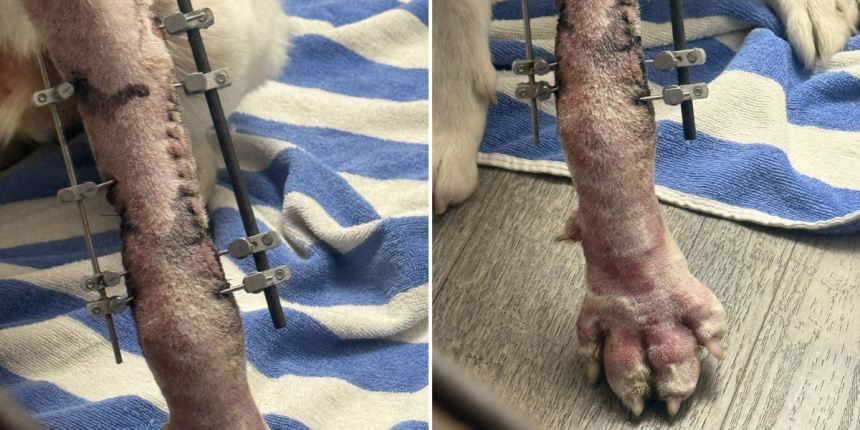
Witnesses reported that Max was hit by a passing vehicle and thrown roughly 20 feet into the air. He sustained serious trauma, including open fractures to both the ulna and radius in his leg. Veterinarians made it clear that the injuries were extensive and that surgery would be complex and costly.
For Ronald, the situation was overwhelming. Beyond the emotional toll, the cost of care presented an impossible decision, one no pet owner should have to make under duress.
It was during this moment that The Light System’s leadership reached out—not only to check on Max’s condition, but to support Ronald himself. In those early conversations, the company made an immediate decision: it would cover the full cost of Max’s surgery.
“They didn’t hesitate,” Ronald recalled. “They told me they didn’t want me making life-or-death decisions based on money. That alone changed everything.”
Removing the Burden, Saving the Life
With the financial pressure lifted, Ronald was able to focus entirely on Max’s care and recovery.
“It allowed me to do everything possible to save Max’s life, and his leg,” he said. “Knowing I wasn’t alone, knowing the people I work with genuinely cared about what my family was going through, made a difference I can’t fully put into words.”
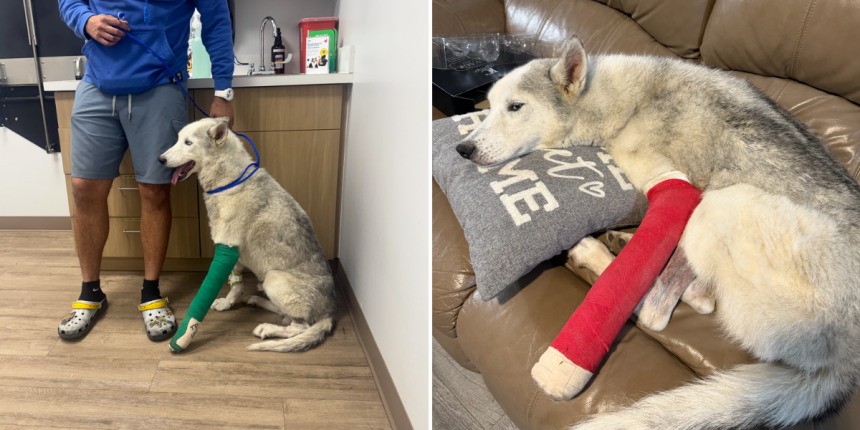
The surgery was successful. And in the weeks that followed, Max became a familiar presence at Ronald’s workplace, accompanying him during recovery. At the warehouse, Max often rested quietly among the company’s signature light products, an unplanned but fitting symbol of where his second chance had begun.
Just three weeks later, Max was back on his feet, running comfortably and regaining his strength.
The Role of Customers in Making It Possible
While the gesture came directly from company leadership, The Light System is careful to emphasize that this moment did not happen in isolation. According to the company, its ability to step in was made possible by the continued trust and support of its customers.
“This is something we could only do because of the people who believe in what we build and support our work every day,” the company shared. “Our customers made this possible, even if they didn’t know it at the time.”
In that sense, Max’s recovery became more than an internal story. It reflected a larger ecosystem—one where customer loyalty enables a business not only to grow, but to act decisively and compassionately when it matters most.
More Than a Workplace
For Ronald, the experience fundamentally reinforced his decision to join the company.
“I’ve worked in many environments, including the military,” he said. “This was the first time I felt leadership cared about my family and me on a truly personal level. I didn’t have to ask for help. They were already there.”
He described The Light System not as a workplace, but as a place where people look out for one another, where individual contributions matter because they support something larger than any single role.
A Reflection of Core Values
The company does not frame its actions as extraordinary. Instead, leadership views the decision as a natural extension of its values, supporting people through difficult moments, without hesitation or calculation.
Since Max’s recovery, the story has resonated both within the company and among customers who have learned of it. Not because it was dramatic or publicized, but because it quietly demonstrated how shared success, between a company, its employees, and its customers, can have real-world consequences.
In this case, it meant saving a life.